



Many marketing students learn digital marketing in theory but rarely have the chance to apply it in a real campaign. This digital marketing competition case study explores how our team participated in the National Digital Business Competition organized by VECOM and VNNIC, where we developed a social media campaign to promote the id.vn domain to Gen Z audiences. In this article, you will discover the market research, campaign strategy, content execution, and measurable results behind the project. If you are interested in digital marketing, social media campaigns, or building a personal portfolio in the marketing field, this case study provides practical insights and real lessons from a national competition experience.
Facebook: PACE Team
View full plan:Digital marketing competition
View full Slide Presentation: Marketing Proposal
The posters that I designed: View full 19 posters
1. Digital Business Competition VECOM 2024 Overview

1.1. Introduction to the National Digital Business Competition
The Digital Business Competition 2024 is a national academic competition organized by the Vietnam E‑commerce Association in collaboration with the Vietnam Internet Network Information Center. The competition aims to encourage university students to apply digital marketing knowledge, strategic thinking, and creativity to solve real business challenges in the digital economy.
Every year, the competition attracts teams from universities across Vietnam who compete by developing digital marketing strategies for real products, services, or technology initiatives. Instead of focusing only on theory, participants must conduct market research, analyze consumer behavior, and design integrated marketing campaigns that can realistically be implemented.
For students studying digital marketing and e-commerce, competitions like this provide a valuable opportunity to apply classroom knowledge in a real-world context. Participants experience the entire marketing process, from identifying a market problem to building a strategic communication plan and presenting it to industry experts.
Our team participated in the competition with a project focused on promoting the id.vn domain, a digital identity solution developed to help Vietnamese citizens build their personal online presence. The challenge required us to design a digital marketing campaign that could increase awareness of this domain among young users and demonstrate its value for personal branding in the digital era.
Through this project, we were able to explore how digital marketing strategies can influence online behavior, especially among younger audiences who spend a significant amount of time on social media platforms.
1.2. Marketing challenge of promoting the id.vn domain
The id.vn domain represents a unique initiative in Vietnam’s digital ecosystem. Unlike traditional domain names that are typically used by businesses or organizations, this domain is designed specifically for individuals who want to create a personal online identity.
However, despite its potential value, the domain still faces a significant marketing challenge. Many young users, especially students and Gen Z consumers, are not familiar with the concept of domain ownership. For them, building an online presence often means using social media platforms rather than creating their own digital identity.
This gap in understanding creates a major communication barrier. While the domain provides an opportunity for individuals to build a professional portfolio, personal website, or online brand, the target audience may not immediately recognize its benefits.
At the same time, the digital environment is rapidly evolving. More young people are becoming interested in personal branding, online portfolios, and digital identity. Students are increasingly aware that having a strong online presence can support career development, entrepreneurship, and creative expression.
This shift creates an important opportunity for marketing campaigns. By connecting the idea of personal identity with digital tools like the id.vn domain, it becomes possible to communicate the value of owning a personal online space.
Therefore, the main marketing challenge of this campaign was not only to promote a domain product but also to educate Gen Z users about the concept of digital identity and the role it plays in building a personal brand in the modern internet ecosystem.
1.3. Campaign objective and communication goals
To address this challenge, our team developed a digital marketing campaign with three main objectives.
The first objective was to increase awareness of the id.vn domain among Gen Z users. Since the domain was still relatively new, many young people had never heard about it or understood how it could be used. Increasing visibility was therefore the first step toward encouraging adoption.
The second objective was to encourage domain registration by demonstrating the practical value of owning a personal domain. Instead of positioning the domain as a technical product, the campaign focused on showing how it could help users build their personal online presence.
The third objective was to help Gen Z understand the importance of personal branding in the digital age. Today, individuals increasingly build their reputation online through portfolios, blogs, and personal websites. A personalized domain name can become a powerful tool for expressing identity and professionalism.
By connecting these objectives with engaging digital content, the campaign aimed to transform the perception of domain ownership from something technical and unfamiliar into something creative, personal, and meaningful for young internet users.
2. Market Research and Campaign Strategy
2.1. Market research on the domain industry and digital identity
Before developing the campaign strategy, our team conducted research on both the global and Vietnamese domain markets.
Globally, the domain industry continues to grow steadily as businesses, organizations, and individuals expand their online presence. According to industry reports, there are hundreds of millions of registered domains worldwide, and the number continues to increase every year as digital transformation accelerates.
In Vietnam, the domain market is also experiencing strong growth. National domain extensions have become increasingly popular as users seek trusted online identities that reflect their geographic and cultural context. Statistics indicate that a large number of Vietnamese internet users consider national domains to be more reliable and secure than generic international domains.
At the same time, the concept of digital identity is becoming more important. As people participate in online communities, create content, and build careers through digital platforms, their online identity becomes an extension of their personal and professional life.
This trend creates a natural opportunity for personalized domain names. Instead of relying solely on social media platforms, individuals can build a more independent and professional digital presence through personal websites or portfolios connected to their own domain name.
Understanding this broader market context helped our team identify the strategic potential of promoting the id.vn domain as a tool for personal digital identity.

2.2. Understanding Gen Z behavior and personal branding trends
A key focus of our research was understanding the behavior and motivations of Gen Z, the primary target audience of the campaign.
Gen Z is one of the most digitally connected generations. They spend a significant amount of time on social media platforms such as TikTok, Instagram, and YouTube. These platforms allow them to express their creativity, share personal experiences, and connect with communities around shared interests.
At the same time, many Gen Z users are becoming increasingly interested in personal branding. They want to showcase their skills, hobbies, and achievements online, whether through creative content, professional portfolios, or entrepreneurial projects.
However, despite this interest, many young users still lack a clear starting point for building a personal brand. They may actively use social media but do not yet understand how to create a more structured and professional online presence.
This insight became a critical foundation for our marketing strategy. If the campaign could connect the concept of personal expression with the idea of owning a personal domain, it could help young users see domain ownership as a natural extension of their digital identity.
2.3. SWOT analysis and competitor landscape
To develop an effective strategy, our team also conducted a SWOT analysis for the id.vn domain.
One of the key strengths of the domain is that it belongs to the national domain system of Vietnam. This association increases trust and credibility while also highlighting its local relevance for Vietnamese users. Additionally, the domain is designed specifically for individuals, which differentiates it from many other domain options that primarily target businesses.
Another advantage is the relatively low cost of registration, along with promotional policies that make the domain accessible to young users. This pricing strategy helps remove financial barriers for students and early-career professionals who want to establish an online identity.
However, the domain also faces several weaknesses. Since it is still relatively new, many users are not familiar with it. The lack of widespread recognition means that potential users may not immediately understand its purpose or value.
From a competitive perspective, the domain market includes many alternatives such as traditional international domains and other national extensions. These options are already widely recognized, which makes it more difficult for a new domain to gain attention.
Despite these challenges, the analysis revealed a strong positioning opportunity. By emphasizing personal identity, cultural relevance, and accessibility, the id.vn domain can occupy a unique position in the market as a digital identity tool designed specifically for Vietnamese individuals.
2.4. Campaign big idea Show tài hạng A
Based on the research insights, our team developed the campaign’s central creative concept: “Show Tài Hạng A.”
The idea behind this concept was to encourage young people to confidently showcase their talents, personalities, and achievements online. Instead of presenting the domain as a technical product, the campaign positioned it as a platform that allows individuals to express who they are in the digital world.
The key message of the campaign was “Bung chất khoe tài cùng tên miền id.vn.” This message highlights the connection between personal creativity and digital identity, suggesting that a personalized domain can serve as a stage where individuals present their unique strengths.
To bring this concept to life, the campaign used engaging social media content, including short videos, visual posters, and interactive activities designed to resonate with Gen Z audiences.
By focusing on self-expression and individuality, the campaign aimed to transform the perception of domain ownership from a purely technical concept into a creative and empowering tool for personal branding in the digital era.
3. Campaign Execution and My Role in the Project
3.1. Building the integrated marketing communication plan
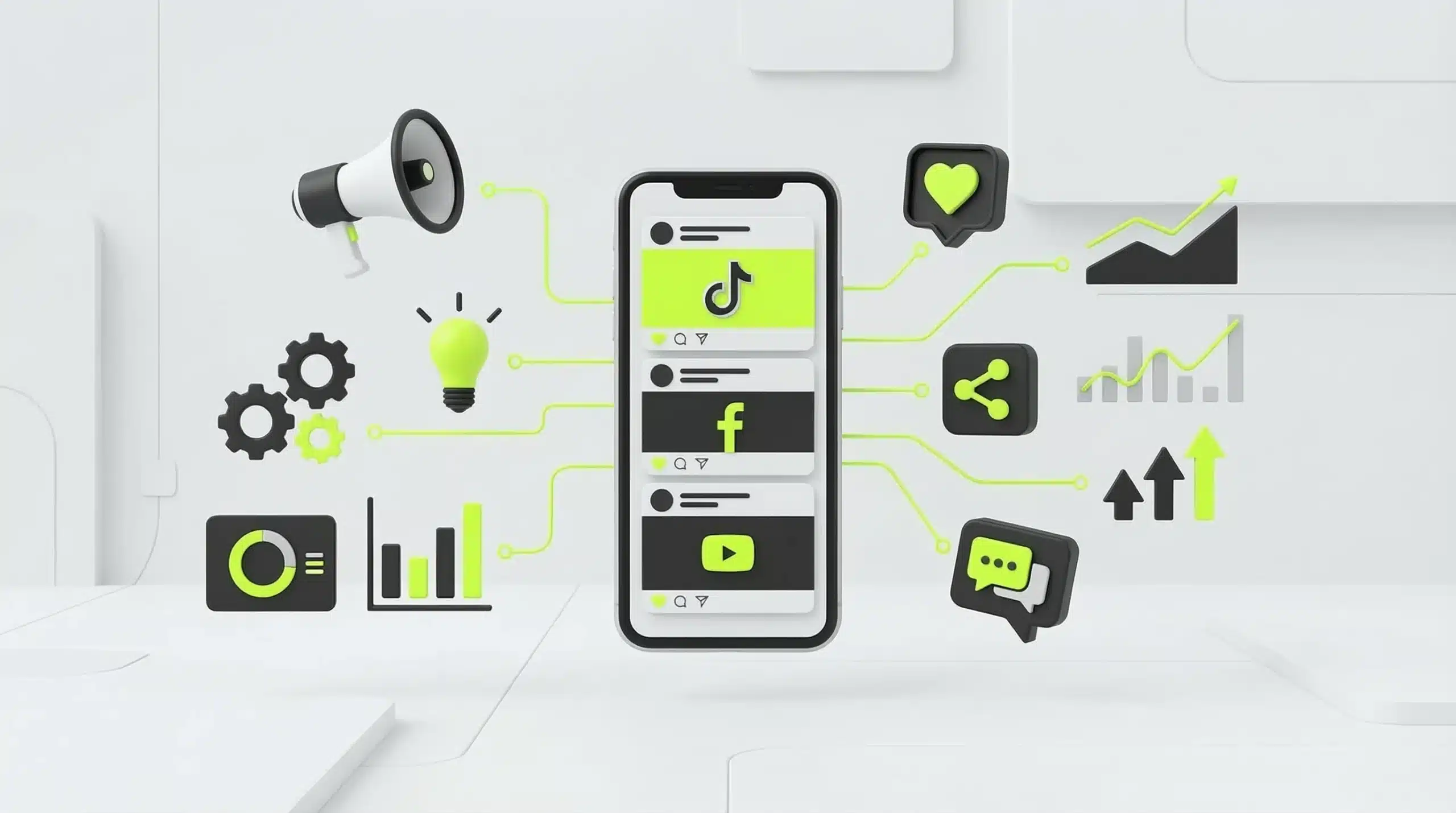
After defining the campaign strategy and creative concept, our team began developing a detailed Integrated Marketing Communication (IMC) plan. The goal was to deliver a consistent message across multiple digital platforms while maximizing the reach of the campaign among Gen Z audiences.
Instead of relying on a single communication channel, the strategy focused on combining several platforms that Gen Z users interact with daily. Each platform was selected based on its strengths and its ability to deliver a specific type of content experience.
The campaign primarily focused on three social media platforms:
- TikTok for short-form video storytelling and viral content
- Facebook for community interaction and information sharing
- YouTube for longer video content and campaign storytelling
These channels allowed the campaign to create multiple touchpoints throughout the customer journey. Users could first encounter the message through entertaining short videos, then learn more about the concept through longer content or community discussions.
The IMC plan was designed around three key communication stages:
- awareness: introducing the concept of digital identity and the id.vn domain
- engagement: encouraging users to interact with campaign content and explore the idea of personal branding
- retention: maintaining interest through creative content and interactive activities
This integrated approach helped ensure that the campaign message remained consistent while reaching audiences in different digital environments.
3.2. Producing video content and social media storytelling
Video content became the central format of the campaign because of its strong influence on Gen Z audiences. Platforms like TikTok and YouTube have transformed how young users discover information, often preferring short videos over traditional text-based content.
As part of the campaign execution, I was responsible for producing ten marketing videos using CapCut. These videos were designed to communicate the campaign message in an engaging and accessible way.
The video content focused on several themes:
- introducing the idea of personal digital identity
- encouraging young people to showcase their talents and individuality
- demonstrating how a personal domain could support personal branding
To make the content more engaging, the videos incorporated storytelling elements, trending audio, and dynamic editing styles that align with typical Gen Z content consumption patterns.
Short-form video formats were particularly effective because they allow complex ideas to be communicated quickly. Instead of explaining domain technology in a technical way, the videos focused on relatable scenarios that showed how digital identity could benefit students and young professionals.
This storytelling approach helped transform the campaign message into content that felt natural and entertaining rather than purely promotional.
3.3. Designing marketing visuals and campaign materials
In addition to video production, visual design played a crucial role in supporting the campaign’s communication strategy. Social media platforms rely heavily on visual content, and well-designed graphics can significantly improve engagement.
As part of the campaign execution, I designed twenty-two marketing posters and promotional visuals using Canva. These visual materials were used across different social media platforms to reinforce the campaign message and maintain visual consistency.
The design approach focused on several key principles:
- maintaining a clean and modern visual style suitable for digital platforms
- using bold typography and dynamic layouts to capture attention
- ensuring that each visual clearly communicated the campaign concept
The posters served multiple functions within the campaign. Some visuals introduced the concept of personal branding, while others promoted video content or encouraged users to explore the benefits of the id.vn domain.
By combining video storytelling with visually appealing promotional graphics, the campaign was able to maintain a consistent visual identity across all communication channels.
3.4. Managing social media channels and digital advertising
Another key responsibility I handled during the project was managing the campaign’s social media channels. This involved scheduling posts, monitoring engagement, and ensuring that content was distributed effectively across platforms.
The campaign maintained active communication on three major channels:
- TikTok
- YouTube
Each platform required a slightly different content strategy. TikTok focused on short-form viral videos, Facebook served as a platform for community engagement and campaign updates, and YouTube hosted longer video content related to the campaign message.
In addition to organic content distribution, the campaign also included paid advertising activities on Facebook and TikTok. These ads helped expand the reach of the campaign beyond the immediate network of followers.
Advertising allowed the campaign to target young users who were most likely to be interested in digital identity and personal branding. By combining organic content with paid promotion, the campaign was able to increase visibility and attract more attention from potential audiences.
Managing these platforms provided valuable hands-on experience in digital marketing operations, from content scheduling to analyzing engagement performance.
4. Campaign Results and Lessons from the Competition
4.1. Digital marketing performance and campaign metrics
One of the most important aspects of any marketing campaign is measuring its effectiveness. After executing the campaign across multiple platforms, our team analyzed the performance data to evaluate the impact of our strategy.
The campaign generated measurable engagement across several social media channels.
On TikTok, the campaign achieved approximately:
- 22,000 video views
- 3,000 user interactions
These numbers demonstrate the strong potential of short-form video content in attracting attention and encouraging user engagement.
On Facebook, the campaign achieved:
- 22,900 total views
- 8,800 audience reach
- 1,600 interactions
These metrics indicate that the campaign successfully reached a significant number of users while also encouraging active participation through likes, comments, and shares.
On YouTube, the campaign generated approximately: 2,400 views
Although YouTube engagement was lower compared to TikTok and Facebook, it still contributed to increasing awareness of the campaign message.
Overall, these results showed that the campaign was able to reach thousands of users and create meaningful engagement despite being developed within the context of a student competition.

4.2. Competition journey and final presentation
Participating in the Digital Business Competition required more than simply creating marketing content. Teams also needed to develop a complete marketing proposal and present their strategic plan before a panel of judges.
Our team prepared a detailed marketing presentation that summarized the entire campaign process, including:
- market research findings
- consumer insights
- campaign strategy and creative concept
- expected marketing impact
The presentation required clear communication of both strategic thinking and practical execution. We needed to explain not only what our campaign idea was but also why it was designed that way and how it addressed the identified market challenges.
Presenting the project before industry experts was both exciting and challenging. It required confidence, teamwork, and the ability to communicate complex ideas in a clear and persuasive way.
At the end of the competition, our team successfully achieved Top 5 in the national Digital Business Competition, reaching the semifinal round. This result reflected the strength of our research, creativity, and teamwork throughout the project.

4.3. Lessons learned from the digital marketing competition
Beyond the campaign results, the competition provided valuable learning experiences that extended beyond the classroom.
One of the most important lessons was learning how to work effectively as a team under tight deadlines. Developing a complete marketing campaign required coordination between different team members who were responsible for research, strategy, content creation, and presentation.
Another key lesson was the importance of self-learning and adaptability. During the project, we often encountered challenges that required us to learn new tools and skills quickly. For example, producing marketing videos and designing visual materials required experimenting with different software and creative techniques.
The experience also highlighted the importance of resilience when facing pressure. Working within a competitive environment encouraged us to stay focused, remain motivated, and continuously improve our ideas.
Overall, the project strengthened not only our digital marketing knowledge but also our problem-solving abilities and teamwork skills.
4.4. Future improvements for the marketing campaign
Although the campaign achieved positive results, there are several areas that could be improved in future implementations.
One possible improvement would be refining the content strategy to create even more engaging storytelling formats that resonate with Gen Z audiences.
Another potential improvement would involve collaborating with influencers or content creators who already have established communities on social media. Influencer partnerships could significantly expand the reach of the campaign and strengthen its credibility among young users.
Additionally, expanding the paid advertising strategy could further increase campaign visibility. More targeted advertising campaigns could help reach audiences who are actively interested in personal branding and digital identity.
By combining these improvements with the existing campaign framework, future campaigns could achieve even stronger marketing impact and engagement.